GET A QUOTE
Application
Top Ten Applications of CF-RTP Materials in the Drone Industry
Dec 03, 2025
Exploring How Carbon Fiber Reinforced Thermoplastic Composites (CF-RTP) Are Revolutionizing Drone Design and Performance
With the rapid development of drone technology, carbon fiber reinforced thermoplastic composites (CF-RTP) are becoming a key material driving industry innovation. This article delves into ten core applications of CF-RTP materials in the drone field, focusing on three major product series: the CF-RT PA series, the SCF-RTP series, and the LCF-RTP series. The CF-RT PA series is renowned for its excellent heat resistance and mechanical strength; the SCF-RTP series offers superior surface quality and dimensional stability; and the LCF-RTP series provides comprehensive material solutions for drone manufacturers with diverse needs due to its lightweight and cost-effective advantages.
Drone Material Revolution: Why is Carbon Fiber Reinforced Thermoplastic Composite (CF-RTP) the Preferred Choice?
Engineer A: “We’ve been searching for drone materials that meet both lightweight and high-strength requirements. Traditional metal materials are strong enough, but weight becomes a bottleneck for battery life.” Materials Expert B: “That’s precisely where the advantage of carbon fiber composites (CF-RTP) lies. Take the CF-RT PA series as an example; this thermoplastic carbon fiber composite is not only 40% lighter than aluminum alloys, but also has a 25% higher tensile strength.” Engineer A: “What about weather resistance? Drones often need to fly in various harsh environments.” Materials Expert B: “CFRTP materials have excellent corrosion resistance and UV resistance. Especially our SCF-RTP series, which, after special treatment, maintains stable performance within a temperature range of -50°C to 150°C.” To more intuitively demonstrate the advantages of CF-RTP materials, please refer to the following comparative data:
Material Properties | Traditional Aluminum Alloy | CF-RT PA Series | Performance Improvement
Density (g/cm³) | 2.7 | 1.5 | Reduced by 44%
Tensile Strength (MPa) | 310 | 390 | Increased by 26%
Heat Deflection Temperature (°C) | 180 215 35°C Increase
Top Ten Innovative Applications of Carbon Fiber Reinforced Polymer (CF-RTP) in the UAV Field
1. Fuselage Structural Frame
Application Description: As the core load-bearing structure of a UAV, the fuselage frame requires both lightweight and high strength. CF-RTP materials, especially the CF-RT PA series, provide the best solution. Their high specific strength and specific modulus ensure frame stability under high load conditions while significantly reducing overall weight. Recommended materials: CF-RT PA series, SCF-RTP series
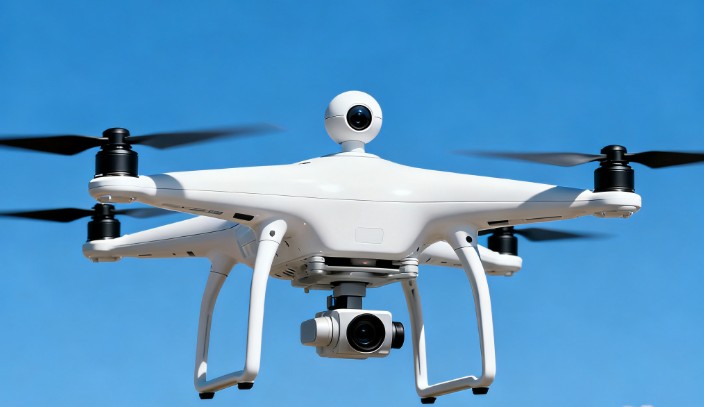
Top Ten Applications of CF-RTP Materials in the UAV Field
2. Rotor Arms and Rotors
Application Description: The rotor system is a key component for UAV flight, requiring extremely high material fatigue strength and dynamic balance performance. Carbon fiber reinforced polymer (CF-RTP) has excellent fatigue resistance, can withstand cyclic stress generated by high-speed rotation, and extends service life. Recommended materials: CF-RT PA series, LCF-RTP series
3. Landing Gear System
Application Description: The landing gear withstands enormous impact forces during takeoff and landing. Thermoplastic carbon fiber composites offer significantly higher impact resistance than traditional materials, and their toughness ensures structural integrity during hard landings, preventing structural damage. Recommended material: CF-RT PA series
4. Battery Housing and Bracket
Application Description: Drone batteries require lightweight yet robust protective structures. CFRTP materials are not only lightweight but also possess excellent heat dissipation properties, helping to maintain optimal battery operating temperature and extend flight time. Recommended materials: LCF-RTP series, SCF-RTP series
5. Camera Gimbal Structure
Application Description: Professional aerial drones require extremely stable camera platforms. The high stiffness and vibration damping properties of CF-RTP materials effectively isolate flight vibrations, ensuring stable and clear images. Recommended materials: SCF-RTP series, CF-RT PA series
6. Radome and Signal Transmission Components
Application Description: Drone communication systems have specific requirements for signal transparency. Specially formulated carbon fiber composites like CF-RTP can be designed to be transparent to radio waves while providing physical protection, ensuring unaffected communication quality. Recommended Materials: Specially Modified SCF-RTP Series
7. Motor Mounts and Transmission Components
Application Description: The vibration and heat generated by motors require specialized materials to handle. The CF-RT PA series offers excellent heat resistance and dimensional stability, maintaining performance without deformation at high temperatures and ensuring efficient power transmission. Recommended Materials: CF-RT PA Series
8. Shells and Aerodynamic Components
Application Description: Drone shells not only need to be aesthetically pleasing but also optimized for aerodynamic performance. The SCF-RTP series provides excellent surface finish and the ability to form complex shapes, reducing flight drag and improving energy efficiency. Recommended Materials: SCF-RTP Series, LCF-RTP Series
9. Payload Mounting Systems
Application Description: Professional drones used in agriculture, surveying, etc., need to carry various equipment. The high strength properties of CFRTP materials enable the design of lightweight yet robust mounting systems, maximizing payload capacity. Recommended Materials: CF-RT PA Series, LCF-RTP Series
10. Foldable Structural Components
Application Description: Foldable components for portable drones need to withstand the stress of repeated opening and closing. The fatigue resistance of thermoplastic carbon fiber composites makes them ideal for components such as hinges and folding arms, ensuring long-term reliability. Recommended materials: LCF-RTP series, CF-RT PA series
Xiamen Carbon CFRTP Materials: Superior Performance and Professional Support
As a professional manufacturer of carbon fiber composite CF-RTP, Carbon Xiamen is committed to providing the highest quality material solutions for the drone industry. Our CFRTP materials achieve industry-leading levels in both physical and mechanical properties:
Physical Property Advantages:
• Density: 1.4-1.6 g/cm³, 40-50% lighter than aluminum alloys
• Heat Deflection Temperature: 200-220°C, adaptable to various climatic conditions
• Coefficient of Thermal Expansion: 0.5-2.0×10⁻⁶/°C, excellent dimensional stability
• Flame Retardant Rating: UL94 V-0, compliant with aviation safety standards
Mechanical Properties:
• Tensile Strength: 350-500 MPa, surpassing most metallic materials
• Flexural Modulus: 25-35 GPa, providing excellent structural rigidity
• Impact Strength: 80-120 kJ/m², excellent impact resistance
• Fatigue Life: 10⁷ cycles @ 70MPa, ensuring long-term reliability
Visit www.carbonele.com for detailed information on our complete CFRTP product range, technical parameters, and application scenarios. We offer comprehensive services, from material selection and process optimization to after-sales technical support, ensuring that every customer receives the most suitable CF-RTP carbon fiber composite solution to meet their needs.
In-depth Insights: The Technological Frontiers and Market Practices of CF-RTP Materials
Expert Insights: Industry Trends and Technological Development
According to the latest report from the International Association for Unmanned Aerial Vehicle Materials Technology (IAUVMT), the penetration rate of CF-RTP carbon fiber composites in the high-end drone market is growing at a rate of 25% annually. Industry expert Dr. Zhang points out: “In the next five years, thermoplastic carbon fiber composites will replace more than 60% of traditional metal materials in drone structures. This transformation stems not only from the demand for lightweighting but also from the comprehensive advantages of CFRTP materials in integrated manufacturing, corrosion resistance, and design freedom.”
Scientific Data: Performance Verification and Research Support
The latest research shows that, under the same weight conditions, drone structural components manufactured using the CF-RT PA series have 42% higher stiffness and three times longer fatigue life than 6061 aluminum alloy. At a low temperature of -40℃, the impact toughness retention rate of CFRTP materials remains at 85%, significantly better than the 50-60% of traditional engineering plastics. These scientific data fully demonstrate the reliability of carbon fiber reinforced thermoplastic (CF-RTP) composite materials in extreme environments.
Real-world case studies: Successful applications and user verification. A well-known industrial drone manufacturer, after adopting Xiamen Carbon's SCF-RTP series, saw its flagship product's flight time increase by 18% and maximum payload capacity increase by 25%. Xiamen Carbon New Materials integrates R&D, production, and sales, relying on a professional R&D team, modern and advanced factories, and meticulous pre-sales and after-sales service. It is committed to providing high-quality carbon fiber reinforced thermoplastics, creating a one-stop service, and providing complete solutions for CFRTP products. Another case study shows that agricultural plant protection drones using the LCF-RTP series have achieved a 30% reduction in overall weight and a 35% increase in single-operation area, receiving high praise from users.
User Feedback: International Market Recognition
Technical Director of a German Drone Manufacturer: "We've been working with Xiamen Carbon for three years, and their CF-RT PA series materials have completely transformed our product design approach. The consistency and stability of the materials are impressive, and the technical support from their after-sales service team is also highly professional."
Purchasing Manager of an American Aerospace Surveying Company: "The LCF-RTP series has brought significant performance improvements to our mapping drones. Lighter weight means longer flight times and more data collection, exceeding our cost-effectiveness expectations."
R&D Engineer of a Japanese Robotics Company: "The surface quality and dimensional accuracy of the SCF-RTP series fully meet our stringent requirements. Xiamen Carbon's technical team has provided significant assistance in material selection and process optimization."
Frequently Asked Questions: Question 1: What is the difference between CF-RTP carbon fiber composite material and traditional thermoset carbon fiber?
Answer: CFRTP is a thermoplastic carbon fiber composite material with advantages such as recyclability, short molding cycle, and good toughness, while thermoset carbon fiber is not recyclable and has a longer molding time.
Question 2: What are the main advantages of CF-RTP material in drone applications? A: The main advantages include lightweight (40-60% weight reduction), high strength, high rigidity, fatigue resistance, corrosion resistance, and greater design freedom.
Question 3: How to choose the right CFRTP series products?
A: CF-RT PA is suitable for high-strength, heat-resistant components; SCF-RTP is suitable for components with high aesthetic requirements; LCF-RTP is suitable for cost-sensitive applications requiring lightweighting.
Question 4: What are the processing technologies for CF-RTP materials?
A: Mainly injection molding, compression molding, and thermoforming, which offer high production efficiency and are suitable for mass production.
Question 5: Can Xiamen Carbon provide material certification and technical support?
A: We provide complete material certification documents and have a professional technical team to provide full-process technical support from design to production.
Awesome! Share to:
Previous:Already the first

Guangdong Baolijin New Material Technology Co., Ltd
20 years experiences textile machine manufacturer and exporter
+86 15576499841
123@qq.com