Application
Core technology: LFT material analysis
LFT (Long Fiber Reinforced Thermoplastic)

What is LFT?
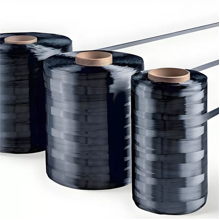
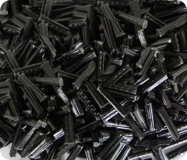
Continuous fiber bundles are fully coated with thermoplastic resin through a special impregnation process, and then cut into longer granules (5-25mm), thus combining the moldability of resin with the high strength of fiber.

Superior Mechanical Properties
Long fibers form a three-dimensional network "skeleton," which has far greater tensile and impact resistance than short fiber reinforced plastics (SCF).

High dimensional stability
It effectively suppresses the thermal expansion of the matrix resin, making the parts more precise and stable in dimensions under complex environments.

High degree of design freedom
It can realize one-piece injection molding of complex geometries, meeting diverse industrial design needs.
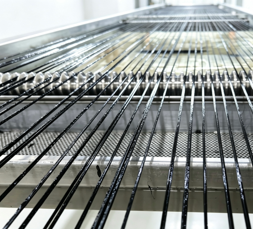
Key Granulation Process (LFT-G)
The mainstream method uses a **coating/impregnation process**: continuous fiber bundles pass through a high-temperature resin melt tank, so that the resin uniformly coats the fibers. After cooling and shaping into continuous rods, they are then cut into LFT granules according to the required length.
Core Technology: SCF Material Analysis
SCF (Short-cut carbon fiber reinforced thermoplastic): The perfect balance between high performance and low cost
Material definition and core properties
Definition: A novel composite material formed by precisely cutting continuous carbon fibers into short fibers (usually <1mm), fully melting and blending them with high-performance thermoplastic resin through a specific process, and then granulating them.
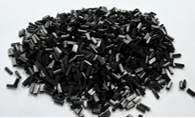
Excellent processability
The fibers are short, causing minimal wear on molding equipment, with a wide processing window and strong adaptability.
Significant performance
Compared to pure resin matrix, tensile strength and flexural modulus are both increased by more than double.
High cost performance
The raw material cost and processing energy consumption are significantly lower than those of long fiber composite materials, giving it the advantage of large-scale mass production.
Granulation process: Twin-screw extrusion melt blending
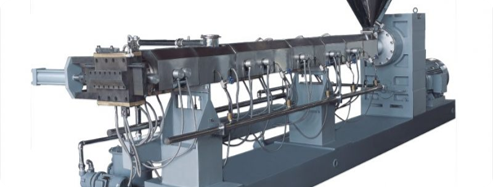
Core process: Short-cut carbon fibers and resin particles are mixed in a specific ratio → fed into a twin-screw extruder, where the fibers and resin are uniformly dispersed and fully melt-bonded at high temperature → extruded into strands, cooled and shaped → precision granulation to obtain the final SCF-reinforced particles. This process ensures the uniform distribution of carbon fibers in the matrix.
Performance and process comparison between SCF and LFT
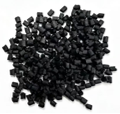
SCF · Short-cut carbon fiber
Fiber length
<3mm
Comprehensive cost
Lower price (cost-effective option)
✅ Core advantages: Excellent processing performance and high production efficiency
📊 Mechanical properties: Moderately reinforced, suitable for general structures
⚙️ Granulation process: Twin-screw extrusion blending, mature technology
⚠️ Processing challenges: Relatively low wear and tear on molding equipment
💡 Typical application scenarios
Electronic and electrical enclosures, industrial structural components, lightweight automotive structural components, chemical pumps, semiconductors
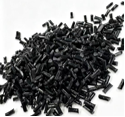
LFT · Long Fiber Reinforced Plastic
Fiber length
5-25mm
Comprehensive cost
Higher performance (high-performance option)
✅ Core advantages: Extremely strong impact resistance and fatigue resistance, excellent mechanical properties.
📊 Mechanical properties: Significantly enhanced strength and modulus, with high overall performance.
⚙️ Granulation process: Resin coating/impregnation process is used to protect the integrity of the fibers.
⚠️ Processing challenges: Requires low-shear screws and special molds to prevent fiber breakage.
💡 Typical application scenarios
Aerospace, military components, machine heat, high-end sports equipment, low-altitude economy
Performance and process comparison between SCF and LFT
Density (g/cm³)
LFT composite material: 1.3-1.6 | Aluminum alloy: 2.7
Weight loss of approximately 40-60%
Fatigue strength (MPa)
LFT: ~Tensile strength 30-50% | Aluminum alloy: ~15-20%
Significantly superior fatigue resistance
Tensile strength (MPa)
LFT composite material: 350-390 | Aluminum alloy: ~310
Strength is similar, and in some aspects it can surpass it.
Coefficient of thermal expansion (10⁻⁶/°C)
LFT: 1-5 (along the fiber direction) | Aluminum alloy: 23.6
Excellent dimensional stability
Tensile modulus (GPa)
LFT composite material: 40 | Aluminum alloy: ~69
Higher specific modulus (modulus/density)
Impact strength (kJ/m²)
LFT composite material: 40 - 60 | Aluminum alloy: ~14
The unique long fiber network structure can efficiently absorb impact energy.
Baolijin carbon fiber composite material grades and core properties
Baolijin's products combine the advantages of carbon fiber and high-performance resin, perfectly integrating the material's mechanical properties, weather resistance, and functionality, showcasing outstanding overall performance.

Lightweight and High Strength
- Density is approximately 1.3-1.5 g/cm³, about 50% lighter than aluminum alloys.
- Specific strength and specific modulus are far superior to traditional metallic materials, with high rigidity.

Chemical corrosion resistance and wear resistance
- Excellent resistance to acids, alkalis, and organic solvents (PPS matrix)
- Reduced coefficient of friction by 30%-50%, extending component life by 2-3 times

Heat resistance and dimensional stability
- Heat distortion temperature (HDT) up to 220-250℃
- Low creep, deformation reduced by 60%-80% over long-term use

Multifunctional integration
- Integrating structural support and lightweight design, it also possesses excellent electrical
- conductivity/antistatic properties and electromagnetic shielding characteristics.
Industry Application Case: E-bike Bicycle Frame
Using Baolijin's LFT long carbon fiber composite material for injection molding, the E-bike frame brings revolutionary advantages in all aspects, from performance to cost.
Traditional craftsmanship · Aluminum alloy frame
The assembly of multiple pipe sections involves complex processes, resulting in weak overall structural integrity, susceptibility to corrosion, and significant weight, which impacts range.
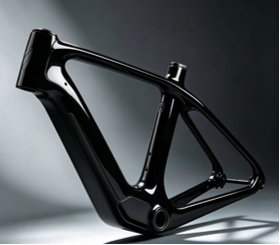
Innovative Solution · LFT Carbon Fiber Injection Molded Chassis
Injection molding for a one-piece structure with high structural integration; long carbon fiber reinforcement for both rigidity and shock absorption; significant weight reduction, resulting in lower production and maintenance costs.

Extremely lightweight
Compared to traditional aluminum alloy frames, it achieves a significant weight reduction of over 50%. While improving handling agility, it effectively reduces overall vehicle energy consumption and extends riding and range on a single charge.

Structural optimization and performance improvement
- Integrated Design: The frame, battery compartment, and motor mount are molded as a single unit, resulting in a more robust overall structure.
- Comfort and Durability: High rigidity provides stable support, while the long-fiber microstructure gives the frame excellent shock absorption and cushioning performance.

Overall cost-effectiveness
- Cost Reduction and Efficiency Improvement: Reduces the number of parts and assembly time, eliminating tedious processes such as welding, grinding, and painting.
- Worry-Free Maintenance: Composite materials fundamentally solve the problem of metal corrosion, significantly reducing maintenance costs throughout the entire lifecycle.
Industry Application Case: Bicycle Parts
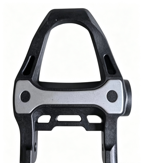
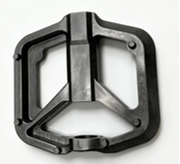
bicycle flat pedals/clipped pedals
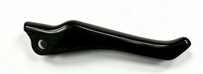
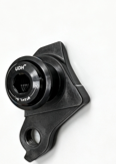
Bicycle handlebars/UDH thru-axle tail hook
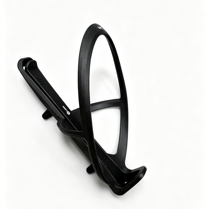
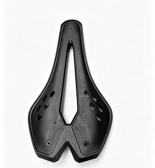
Bicycle water bottle cage/saddle
Thermoplastic carbon fiber (LFT): It is one of the best solutions for lightweighting, high strength and mass production of bicycles, balancing performance, cost and environmental protection, and is especially suitable for high-end structural components of e-bikes, mountain bikes and road bikes.
Industry Application Case: E-bike Bicycle Frame
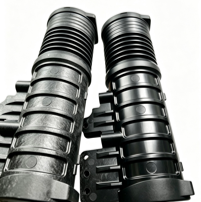
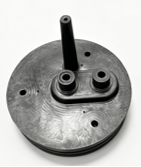
Fluid carries the shell casing/end cap
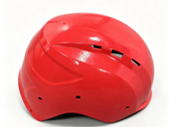
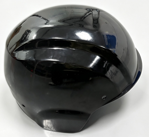
Police/Fire Helmet
Advantages of Thermoplastic Carbon Fiber (LFT): High strength, pressure resistance, puncture resistance, corrosion resistance, and design freedom.
Other industry application cases
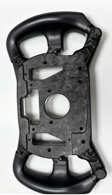
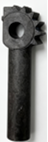
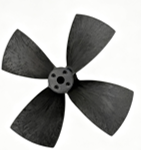
Automotive parts/gears/fan blades
Applications: Battery pack housings and brackets, lightweight seat frames, frame gears, fan blade power.
Core advantages: Significant weight reduction to improve driving range, integrated design for cost reduction and efficiency improvement, and excellent corrosion resistance to extend component lifespan.
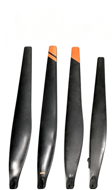
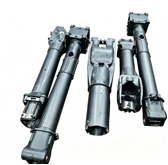
Low-altitude economy and high-end equipment
Application Scenarios: Structures for drone fuselages and arms; core load-bearing structural components for industrial and collaborative robots.
Core Advantages: Combines high specific strength with high fatigue resistance, perfectly meeting the stringent requirements of lightweight, high reliability, and impact resistance in dynamic operations.
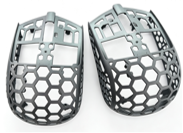
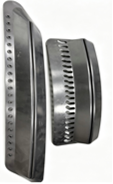
Electronic appliances/musical equipment
Application scenarios: gaming mice, guzheng, electric piano
Core advantages: lightweight, high rigidity and extremely low coefficient of thermal expansion, effectively suppressing vibration and ensuring dimensional stability, ensuring the micron-level operating precision of the device.
Key points of injection molding process: the core of thermoplastic (LFT) material mold making
The core of mold design is to ensure that the molten material fills the cavity smoothly and with low resistance, and to prevent the fibers from breaking at the runner and gate, thereby ensuring the mechanical properties of the final product.
Gating design
- Type: Fan-shaped or flask-shaped gates are preferred; point gates are strictly prohibited.
- Size: Thickness should not be less than 80% of the product wall thickness.
Exhaust system
- Sufficient venting channels must be designed at the final filling position to prevent gas from getting trapped in the cavity and causing surface defects.

Flow channel design
- Shape: Fully circular flow channel with a diameter ≥ 6mm.
- Transition: All corners are designed with large radius fillets.
Temperature control
- Increasing the mold temperature appropriately (40-80℃) helps reduce the viscosity of the melt and improve its fluidity.
Comparison of real-world cases
Project
Traditional mold solutions
Optimized mold design
Mold life
200,000 mold times
500,000 mold times
Surface roughness of products
Ra 0.8μm
Ra 0.1μm
Fiber retention rate
60%
90%
Single-mode cost
¥300,000
¥450,000
Key points of injection molding process: Special requirements for LFT material screws
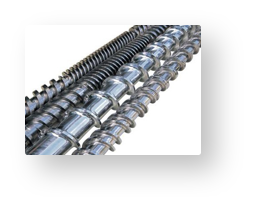
The key to successful injection molding of LFT materials lies in maximizing fiber length retention to ensure superior performance of the final product. Adhering to the "low shear" principle is central, which places special demands on critical components of the injection molding machine.

Length-to-diameter ratio (L/D)
It is recommended to use a ratio of 28:1 to 32:1 to ensure that the material is fully melted and plasticized while avoiding excessive shearing of long fibers.

Screw structure design
We recommend using a screw with a low-shear mixing section and a free-flow check valve to reduce shear heat and ensure smooth material conveying.

Compression ratio
A lower compression ratio is selected, typically set to 1.8:1 to 2.2:1, to reduce the risk of fiber breakage during plasticization.
Nozzle selection
Straight-through nozzles should be preferred, and needle valve nozzles should be avoided as much as possible to reduce mechanical damage to the fibers during the injection process.
Comparison of real-world cases
Index
Traditional screw
Optimized screw
Fiber retention rate
300%-400%
80%-90%
Tensile strength of products
220MPa
390MPa
Screw lifespan
6-12 months
18-24 months
Conductive plastics vs. antistatic plastics: Key differences
Conductive plastics and antistatic plastics are both functional modified plastics. Their core difference lies in their conductivity, which is usually measured by volume resistivity.

Antistatic Plastic
Volume resistivity: 10⁵ ~ 10⁹ Ω·cm
Function: Quickly dissipates static charge, prevents charge accumulation, and plays a "conducting" role.
Applications: Packaging of electronic components, workshop floors, equipment housings, primarily to prevent ESD damage or attract dust.

Conductive Plastic
Volume resistivity: < 10⁵ Ω·cm
Function: It has continuous and stable conductivity and can be used for electromagnetic shielding (EMI) and heating elements to play a "conduction" role.
Applications: Industrial applications requiring extremely high levels of grounding, electromagnetic shielding, explosion protection, or electrostatic discharge protection.
Production process: Raw material selection and core granulation process
Baolijin has mastered the core technologies across the entire chain, from raw material selection to final product molding, laying a solid foundation for high-performance composite materials.
Resin Matrix
The most commonly used matrix resins are PA6, PA66, PPA, PA12, MXD6, PBT, PET, TPU, PPS, LCP, and PEEK. This wide range of resin systems can meet the diverse needs of different industries and applications.
Polyamide (PA6/PA66): Excellent overall performance and wide range of applications.
Polyphenylene oxide (PPO): Excellent dimensional stability, suitable for precision parts.
Polyphenylene sulfide (PPS): High temperature resistance and chemical corrosion resistance.
Other specialty materials: PC, PEEK, PBT, etc.
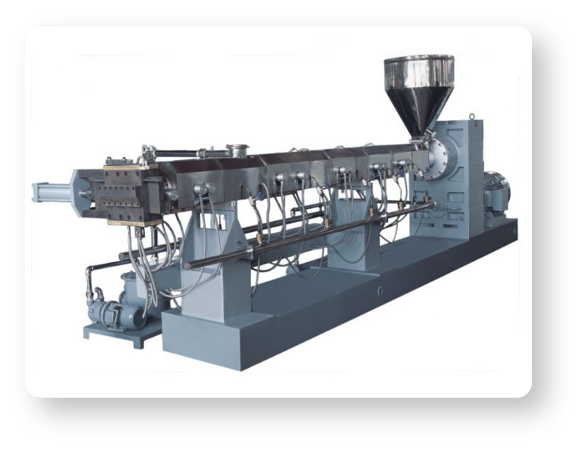
Key value: The special kneading block configuration using twin screws provides powerful shearing and mixing of materials. Precise control throughout the process ensures uniform distribution of carbon fibers in the resin matrix and excellent interfacial bonding, laying the foundation for high-performance products.
Industry Applications: Electronics and Electrical Appliances
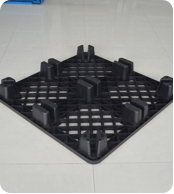
ESD Protective Packaging
Primarily used for pallets, turnover boxes, and IC packaging tubes for various electronic components. By providing stable anti-static properties, it offers the first line of defense for electronic devices, preventing damage during warehousing and transportation.
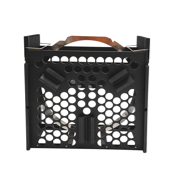
Manufacturing and Precision Instruments
Widely used in wafer carriers, robotic arms, and vacuum pens in semiconductor manufacturing equipment; also used in critical internal structural components of precision instruments such as hard disk drives and printers, providing both protection and structural support.
Addressing core pain points
- Electrostatic Discharge (ESD): Prevents static electricity buildup and instantaneous discharge, eliminating permanent damage to sensitive components such as chips and PCBs.
- Particulate Contamination Control: Antistatic surfaces do not easily attract dust, maintaining a clean production environment and improving product yield.
Core advantages of materials
- Permanent antistatic properties: Conductivity is imparted by internal fillers, and its performance does not diminish over time.
- Excellent mechanical properties: Combining high strength and toughness, it extends equipment lifespan and reduces replacement costs.
- High dimensional stability: High heat distortion temperature ensures the precision of movement and fit tolerances in precision equipment.
Application Case: Magnetic Pump Head/Isolation Sleeve
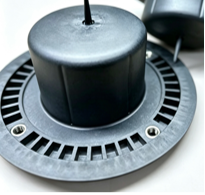
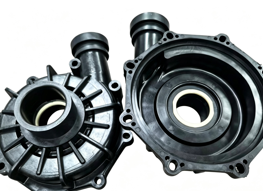

Traditional Solutions and Pain Points
Traditional process: Metal or ordinary magnetic pump head/isolation sleeve, heavy and not resistant to high temperature corrosion. Core pain point: Leads to high engine energy consumption, easy component aging, short lifespan, and high maintenance costs.

Traditional Solutions and Pain Points
Traditional process: Metal or ordinary magnetic pump head/isolation sleeve, heavy and not resistant to high temperature corrosion. Core pain point: Leads to high engine energy consumption, easy component aging, short lifespan, and high maintenance costs.

Extremely Lightweight
It is about 40% lighter than a metal impeller, which effectively reduces engine load and energy consumption.
Excellent high temperature resistance
It can withstand high-temperature environments of 150℃+ for a long time, making it perfectly suited for harsh working conditions.
Application Case: Electric and Wind Power Components
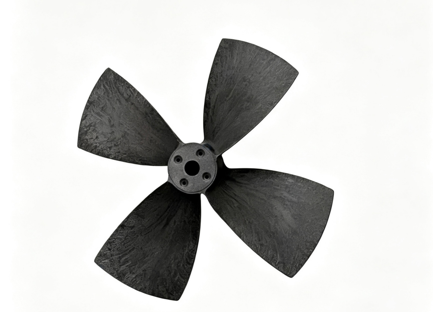
Application Scenarios
Widely used in the core structure of wind turbines as insulating and conductive components to ensure stable operation of the unit.

High-voltage insulation
It possesses excellent electrical insulation properties, effectively preventing leakage and ensuring safe system operation.

Lightweight design
It significantly reduces the structural weight of the tower and nacelle, thereby lowering transportation and installation costs.

Static Electricity Dissipation
It quickly releases the static electricity accumulated on the blade surface, significantly reducing the risk of damage from lightning strikes.
Customized Solutions
We offer antistatic/conductive and high-strength insulating composite materials that are also weather resistant.
Graphene-based heat-dissipating plastics: a new generation of thermal management materials
Graphene heat-dissipating plastic is a new type of functional composite material. It uses high-performance engineering plastic as a matrix and disperses graphene and other high thermal conductivity fillers evenly in it through a special process to form an efficient "thermal conduction path", thereby giving the originally insulating and heat-insulating plastic excellent thermal conductivity.
Matrix
High-performance engineering plastics, such as polyamide (PA) and polyphenylene sulfide (PPS), provide good mechanical and processing properties and form the "skeleton" of materials.

Filler
The core is graphene microsheets, sometimes combined with carbon fibers, carbon nanotubes, etc., which overlap in the matrix to build a through-type, highly efficient heat-conducting network.
Baolijin's representative product: PA-R1108SMX
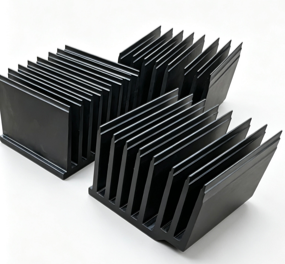
A thermoplastic nanocomposite material with ultra-high thermal conductivity, designed to replace traditional metal heat sinks such as aluminum alloys and magnesium alloys.
✦ Core Advantages: High heat dissipation · High strength · High flame retardancy
Production process: Raw material selection and core granulation process
Baolijin has mastered the core technologies across the entire chain, from raw material selection to final product molding, laying a solid foundation for high-performance composite materials.
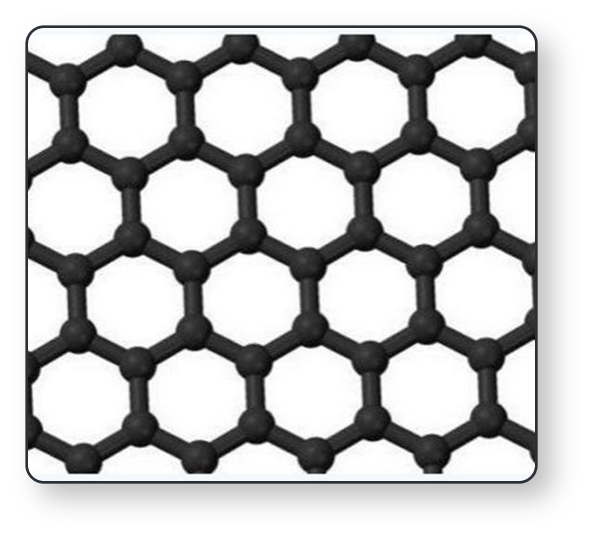

Intrinsic High Thermal Conductivity of Graphene
Graphene conducts heat primarily through phonons, and its theoretical thermal conductivity is as high as 5300 W/m·K, a value far exceeding that of traditional metals such as copper and aluminum.

Constructing a Three-Dimensional Thermal Conductive Pathway
Graphene microsheets act as "thermal bridges" in plastic matrices. When the amount added reaches a specific percolation threshold, the microsheets overlap each other to form a highly efficient three-dimensional thermally conductive network that runs through the material.

Synergistic Heat Dissipation through Thermal Radiation
Polymer matrix materials typically have high infrared emissivity, and while conducting heat, they can actively dissipate heat to the environment through thermal radiation.
Performance Comparison: Graphene Thermal Plastics vs. Traditional Metals
Compared with traditional heat dissipation materials (aluminum alloy, copper), graphene heat dissipation plastics exhibit comprehensive advantages in all aspects.
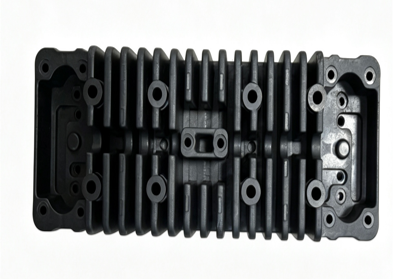
Thermal conductivity | Graphene ~50 W/m·K vs Aluminum ~200 W/m·K
Although individual values are lower than those of metals, the overall thermal radiation capacity of the materials is stronger, heat dissipation is more thorough, and heat dissipation efficiency is better.
Processing Performance | Injection Molding/Compression Molding/Extrusion vs CNC/Die Casting
It offers extremely high design freedom, enabling the one-piece molding of complex irregular structures, significantly shortening the production cycle compared to metal processing.
Electrical insulation Insulating/conductive vs. conductive metals
The conductivity properties of materials can be flexibly designed, providing a natural safety guarantee in precision electronic component scenarios requiring electrical isolation.
Lightweight Advantages | Density 1.5-2.0 g/cm³ (Aluminum ~2.7 g/cm³)
The material density is only 1/2 to 2/3 of that of traditional aluminum, achieving significant weight reduction under the same structure and reducing transportation energy consumption.
Excellent corrosion resistance and stability vs. requires additional surface treatment
No additional anti-corrosion processes such as oxidation and electroplating are required in harsh environments such as humidity and chemical corrosion, saving process costs.
Overall cost advantage significantly reduced
From raw materials and processing to transportation and maintenance, the overall cost of the product throughout its entire life cycle can be effectively reduced by 20%-30%.
Summary of core advantages

Ultra-lightweight
With a density far lower than metals, it reduces weight by 30%-50%, effectively reducing system weight and improving energy efficiency.

High degree of design freedom
It can be injection molded, compressed, or extruded to form complex structures in one piece, reducing parts and assembly processes.

Multifunctional Integration
It integrates functions such as heat dissipation, structural support, electromagnetic shielding, insulation, and corrosion resistance.

Cost-effectiveness
With a 20%-30% reduction in total lifecycle costs and mature production processes, it is well-suited for large-scale, mass production and possesses a significant cost competitive advantage.

High-efficiency heat dissipation
Combining high thermal conductivity with excellent thermal radiation capabilities, this solution significantly improves the heat dissipation efficiency inside the device compared to traditional heat dissipation solutions, ensuring stable performance.
Production process: Selection of core raw materials and melt blending method
Compared with traditional heat dissipation materials (aluminum alloy, copper), graphene heat dissipation plastics exhibit comprehensive advantages in all aspects.

Graphene Morphology: Graphene Flakes (GNPs)
Combining the excellent thermal conductivity of graphene with the feasibility and economy of industrial production, it is currently the most widely used graphene filler in the field of thermally conductive plastics, and can effectively construct a high-efficiency thermally conductive network.
Resin matrix: Polyphenylene sulfide (PPS) or polyamide (PA)
- PPS: Excellent heat resistance, chemical resistance, and flame retardancy, suitable for harsh working conditions.
- PA: Strong overall mechanical properties, good processing flowability, wide range of applications, and economical.
01. Graphene Pretreatment
Surface modification is performed to solve the agglomeration problem and enhance the interfacial bonding and compatibility with the resin matrix.
Advantages: We have overcome the technical challenges of uneven dispersion of graphene in plastics and weak interfacial bonding with the matrix, which prevents the full realization of its thermal conductivity.
Application Case: Electric and Wind Power Components
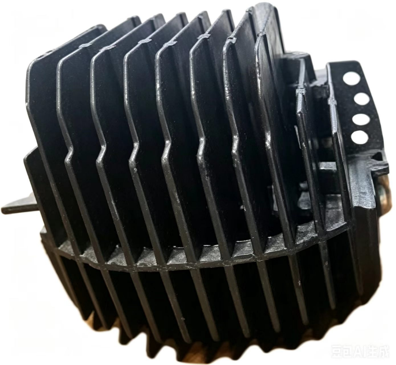
Traditional solutions: Metal stamping / Composite materials
❌ Heavy weight, directly reducing vehicle range | ❌ Complex structural design, high overall manufacturing cost

Baolijin Solution: Graphene Thermally Dissipating Plastic materials
❌ Heavy weight, directly reducing vehicle range | ❌ Complex structural design, high overall manufacturing cost

Excellent electrical insulation
Effectively blocks current, physically eliminating the risk of battery short circuits and improving system safety.
Flexible Design and Integration
The unibody molding process supports the integration of complex functional structures such as cooling channels and sensor mounting.
Application Case: 5G Base Station Antenna Vibrator
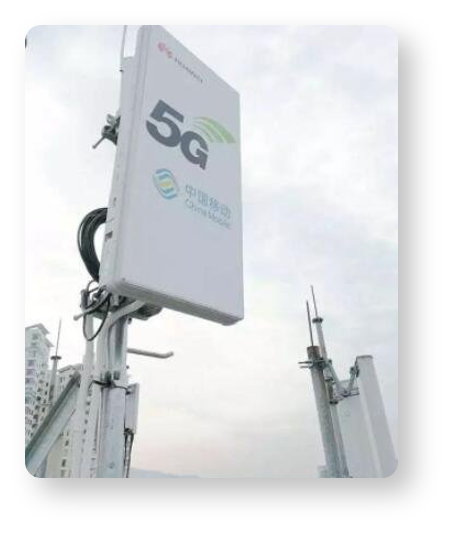
Traditional solutions: metal stamping or die casting
Pain points: heavy structure, high processing costs, susceptible to environmental corrosion, limited product design flexibility, and difficulty in meeting the diverse needs of the 5G era.
Baolijin Solution: Integrated Injection Molding of Graphene-Based Thermal Plastics
Utilizing the superior comprehensive properties of high-performance modified plastics, this solution achieves "replacing steel with plastic," balancing heat dissipation and mechanical strength.
Extremely Lightweight
Overall weight reduction of components by more than 40% significantly reduces base station tower load and transportation and installation costs.
Overall High Performance
It meets the heat dissipation requirements at high frequencies and fully meets the standards in terms of strength, weather resistance, and dielectric properties.
Industry Applications: LED Lighting
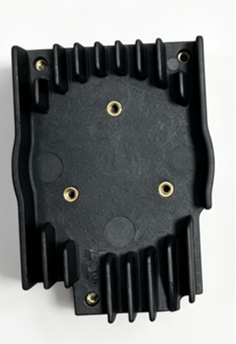
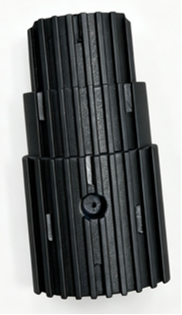
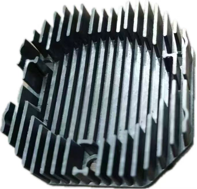

Main application scenarios
Key structural components such as smartphone mid-frames/back covers, laptop shells, game console heat dissipation structures, and power adapter shells.

Industry Pain Points and Challenges
- The trend towards thinner and lighter devices is compressing internal space, severely limiting heat dissipation channels.
- Balancing excellent structural strength with diverse aesthetic and tactile requirements is crucial.

Ultra-thin and lightweight
Achieving a metallic-like texture while significantly reducing the overall weight of the device.
3D integrated molding
It can mold complex internal structures in one piece, effectively improving the heat dissipation efficiency of the equipment.
Wireless charging compatible
It is made of non-magnetic material and will not interfere with the wireless charging function of the device.
Future Outlook: Lightweight Materials Bearing the Weight of Innovation
Guangdong Baolijin New Material Technology Co., Ltd. will continue to uphold the concept of "lightweight materials carrying the weight of innovation", take technological innovation as the core driving force, and strive to become a leading global provider of lightweight solutions, working with partners to create a green industrial future.
Ultra-thin and lightweight
Deepening Technology
We continue to invest in R&D resources, constantly optimize the core formula and production process of LFT materials, explore higher performance and more diversified composite material solutions, and build a strong technological moat.

Market Expansion
Following the development trends of strategic emerging industries such as new energy vehicles, low-altitude economy, and artificial intelligence, we will develop more customized lightweight products that meet the pain points and needs of the industry.

Sustainable development
Actively respond to the "dual carbon" goal, promote the research and application of efficient recycling and reuse technologies for composite materials, and create a green and environmentally friendly material recycling system throughout the entire life cycle.

20 years experiences textile machine manufacturer and exporter